

Retinal Biologics Market to Reach US$ 53.8 Bn by 2033 at 8.7% CAGR | Persistence Market Research
retinal biologics market
Retinal biologics market is growing due to rising eye diseases, advanced therapies, and increasing demand for effective, targeted vision treatments worldwide.
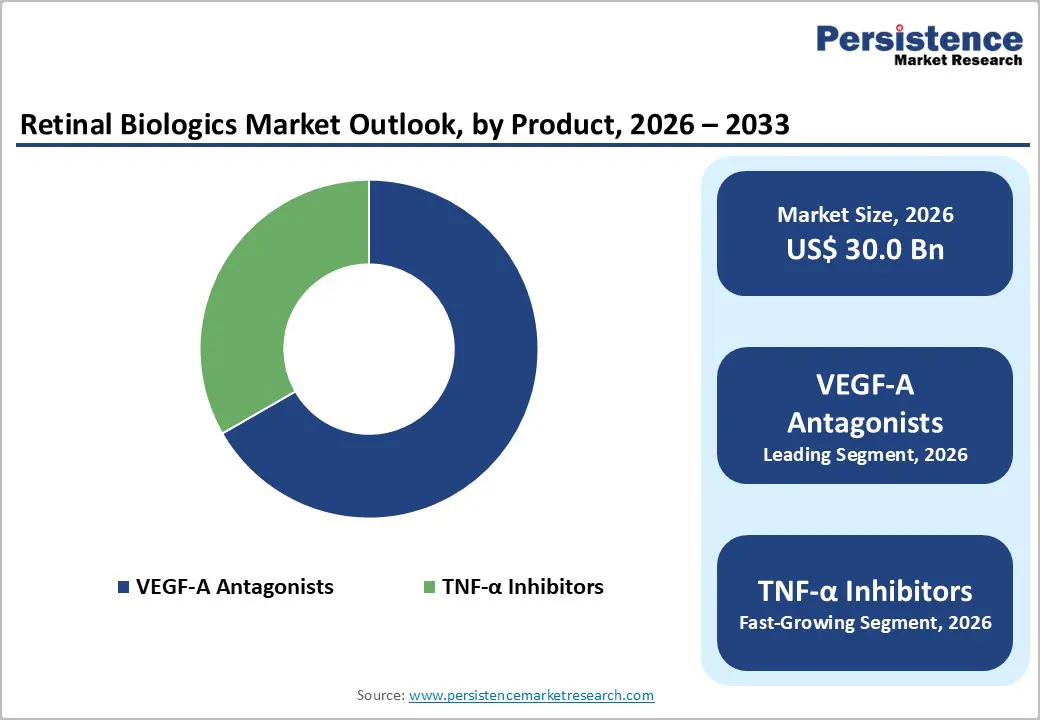
LONDON, UNITED KINGDOM, April 1, 2026 /EINPresswire.com/ -- The retinal biologics market is witnessing significant expansion, driven by increasing prevalence of retinal disorders and rapid advancements in biologic therapies. The global market is projected to grow from US$ 30.0 billion in 2026 to US$ 53.8 billion by 2033, registering a compound annual growth rate of 8.7% during the forecast period. This growth reflects rising demand for targeted and effective treatment options that improve patient outcomes while minimizing systemic side effects.
Biologic drugs have transformed the treatment landscape for retinal diseases by offering precise mechanisms of action. These therapies, particularly anti-VEGF agents, have become the cornerstone of treatment for conditions such as age-related macular degeneration, diabetic macular edema, and retinal vein occlusion. Increasing awareness regarding early diagnosis and treatment is further supporting market growth globally.
Download Your Free Sample & Explore Key Insights: https://www.persistencemarketresearch.com/samples/34570
Key Industry Highlights
Anti-VEGF biologics dominate the retinal biologics market, accounting for a substantial share due to their proven clinical efficacy. These therapies help inhibit abnormal blood vessel growth and leakage, thereby preserving vision in patients. Their widespread adoption is supported by strong clinical evidence, physician preference, and favorable reimbursement frameworks across developed regions.
North America leads the global market due to advanced healthcare infrastructure, high adoption of innovative therapies, and strong presence of leading pharmaceutical companies. Meanwhile, Asia-Pacific is emerging as the fastest-growing region, driven by expanding healthcare access, rising patient awareness, and increasing investments in ophthalmic care and biologics manufacturing.
Market Dynamics
The rising prevalence of retinal diseases is a major factor fueling market growth. Conditions such as age-related macular degeneration and diabetic retinopathy are becoming increasingly common due to aging populations and the global rise in diabetes cases. Improved diagnostic capabilities and screening programs are also contributing to higher detection rates, thereby increasing the demand for biologic treatments.
However, patient compliance remains a significant challenge in this market. Most biologic therapies require frequent intravitreal injections, which can be uncomfortable and inconvenient for patients. The need for repeated clinical visits, associated costs, and fear of injections often lead to reduced adherence to treatment schedules. This can limit the real-world effectiveness of these therapies despite their strong clinical benefits.
On the other hand, the development of biosimilars presents a promising opportunity. Biosimilar retinal biologics offer comparable safety and efficacy at lower costs, improving accessibility for patients and reducing financial burden on healthcare systems. Their introduction is expected to enhance treatment adoption, particularly in emerging markets where affordability remains a key concern.
Get Custom Insights Designed for Your Businecss: https://www.persistencemarketresearch.com/request-customization/34570
Category-wise Analysis
By product type, VEGF-A antagonists hold the largest market share due to their direct action on disease mechanisms. These drugs effectively control abnormal vascular growth, making them highly effective in managing vision-threatening retinal conditions. Their continued dominance is supported by ongoing innovations and the introduction of long-acting formulations.
By indication, macular degeneration accounts for a leading share of the market. The condition is one of the primary causes of vision loss worldwide, particularly among the elderly population. The high prevalence of this disease, coupled with the effectiveness of biologic therapies in slowing its progression, drives sustained demand within this segment.
Regional Insights
North America remains the dominant regional market, supported by strong healthcare systems, widespread insurance coverage, and early adoption of advanced therapies. The region also benefits from high awareness levels and robust research and development activities in ophthalmology.
Europe holds a significant share due to well-established healthcare infrastructure and supportive reimbursement policies. Regular screening programs and early intervention strategies contribute to consistent demand for retinal biologics across the region.
Asia-Pacific is expected to witness the fastest growth, driven by increasing prevalence of diabetes-related eye diseases, improving healthcare infrastructure, and government initiatives aimed at enhancing eye care services. Rapid urbanization and lifestyle changes are further contributing to the rising burden of retinal disorders in this region.
Competitive Landscape
The retinal biologics market is highly competitive, with major pharmaceutical companies focusing on innovation, strategic collaborations, and geographic expansion. Companies are investing heavily in research and development to introduce long-acting biologics, gene therapies, and biosimilars that improve patient convenience and treatment outcomes.
Checkout Now & Download Complete Market Report: https://www.persistencemarketresearch.com/checkout/34570
Global Retinal Biologics Market Segmentation
By Product
VEGF-A Antagonists
TNF-α Inhibitors
By Indication
Macular Degeneration
Diabetic Macular Edema
Diabetic Retinopathy
Uveitis
Others
By Distribution Channel
Institutional Sales
Retail Pharmacies
Mail Order Pharmacies
Retail Sales
By Region
North America
Europe
East Asia
South Asia & Oceania
Latin America
Middle East and Africa
Recent developments, including advancements in gene therapy and sustained drug delivery systems, are reshaping the competitive landscape. These innovations aim to reduce treatment frequency and improve patient adherence, addressing one of the key limitations of current therapies.
Overall, the retinal biologics market is poised for robust growth, driven by technological advancements, increasing disease burden, and expanding access to innovative treatments worldwide.
Read Related Reports:
Crisaborole Market: Global crisaborole market grows from US$2.0 billion in 2026 to US$4.1 billion by 2033, expanding at a CAGR of 10.8%.
Antinuclear Antibody Test Market: Global antinuclear antibody test market is set to growing at a 13.5% CAGR, reaching US$ 7.4 Bn by 2033, driven by rising autoimmune disease cases.
Persistence Market Research
Persistence Market Research Pvt Ltd
+1 646-878-6329
email us here
Visit us on social media:
LinkedIn
Instagram
Facebook
YouTube
X
Legal Disclaimer:
EIN Presswire provides this news content "as is" without warranty of any kind. We do not accept any responsibility or liability for the accuracy, content, images, videos, licenses, completeness, legality, or reliability of the information contained in this article. If you have any complaints or copyright issues related to this article, kindly contact the author above.
