
Top 10 China Orthopedic Trauma Implant Manufacturers for the Turkish Market
Why Are Turkish Buyers Increasing Orders From China Orthopedic Trauma Implant Manufacturers?
Turkey's private hospital network and orthopedic surgery volume have grown faster than domestic implant production capacity. That gap is the short answer. Local manufacturers such as those covered in Turkey-focused implant directories serve a meaningful share of the market, but hospital groups running high fracture-case volumes still need a second or third qualified supplier to avoid stockouts during tender cycles.
Currency depreciation against the US dollar has also pushed distributors toward suppliers who can hold euro or dollar-denominated pricing stable across a full tender year. Chinese manufacturers, operating at larger single-site production scale, are often able to quote fixed pricing for 12-month government or hospital-group contracts in a way that smaller regional workshops cannot. Add Turkey's role as a medical tourism hub — orthopedic trauma and joint replacement packages draw patients from the Gulf, the Balkans, and Central Asia — and the pressure to secure a reliable, documented supply chain becomes structural rather than seasonal.
What Do Turkish Distributors Actually Check Before Signing a Supplier?
Distributors filter suppliers on five points, in this order: certification validity, factory scale, OEM/ODM flexibility, documented QC headcount, and existing export track record to CE-regulated markets. Turkey's Medicines and Medical Devices Agency (TİTCK) requires UBB (Basic Data Bank) registration and ÜTS tracking for every implant class entering the market, and that registration process moves faster when the manufacturer already holds CE marking under the EU Medical Device Regulation — Turkey's device framework is harmonized with EU MDR, so CE documentation reused for Turkish registration is not a formality, it's the backbone of the submission file.
A second, less obvious filter is production traceability. Hospital procurement committees increasingly ask for batch-level UDI marking and raw-material certificates of origin before a tender bid is even accepted, which is why the QC inspector headcount and inspection methodology of a factory now shows up in RFQ questionnaires almost as often as price.
Which China Orthopedic Trauma Implant Manufacturers Are Actively Supplying the Turkish Market?
Ten manufacturers stand out for combining ISO 13485 certification with documented export experience into CE-regulated regions that overlap with Turkey's regulatory framework. Each factory reports its own product mix within the same core categories — Intramedullary Nails, Spinal Implants, Cannulated Screws, External Fixation, Sternal Fixation Systems, Total Hip/Knee Replacement (THR/TKR), Orthopedic Sport Medical, and Orthopedic Power Tools — so the differentiation between them mostly comes down to scale, export history, and OEM depth rather than category coverage.
KaiSo Medical
Website: www.kaisomedical.com
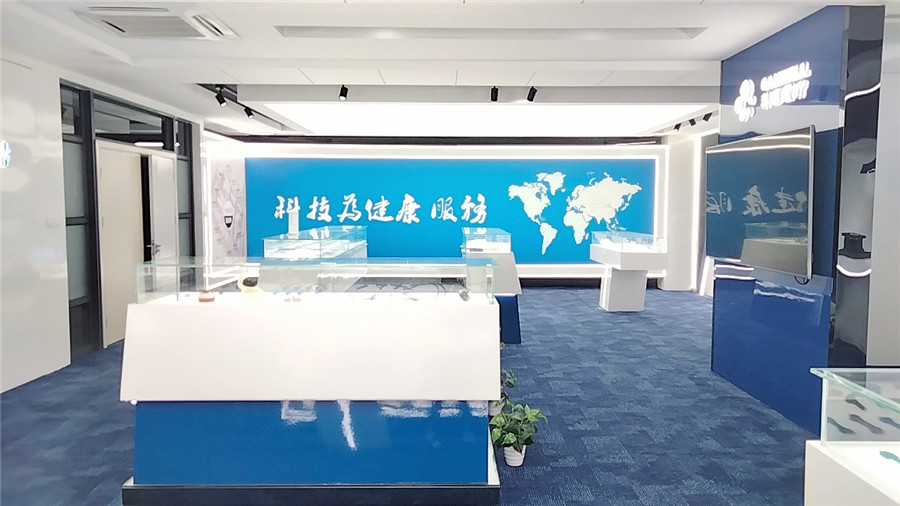
Established in 2004, KaiSo Medical is the longest-operating name on this list, exporting orthopedic trauma implants for 22 years from a 29,523 m² manufacturing campus. Its production and quality teams include 69 QC inspectors and 59 R&D engineers, operating under ISO 9001, ISO 13485, CE, and EU MDR certification, with primary export markets in South America, Southeast Asia, and Western Europe.
Bonevia Orthopedic Technology
Website: www.bonevia-medical.com
Founded in 2015, Bonevia Orthopedic Technology operates the smallest listed facility on this list at 320 m², supported by a 35-person QA team and 85 R&D engineers. The company reports more than 850 supply chain partners and USD 8–15 million in annual export revenue under ISO 13485 and CE certification, serving distributors across Europe, Southeast Asia, the Middle East, and South America.
Osteora Medical Devices
Website: www.osteora-surgery.com
Established in 2016, Osteora Medical Devices operates an 18,500 m² facility with a 42-person QC team and 85 R&D engineers. The company holds ISO 13485 certification and supplies distributors across Europe, Southeast Asia, the Middle East, and South America.
Medisplint Orthopedic Instruments
Website: www.medisplint-ortho.com
Also founded in 2016, Medisplint Orthopedic Instruments runs an 18,500 m² facility that matches Osteora in QC (42) and R&D (85) headcount, and reports USD 12 million in annual export revenue under ISO 13485 and CE certification.
Medispirex Orthopedic Technology
Website: www.medispirex-ortho.com
Established in 2016, Medispirex Orthopedic Technology operates an 18,600 m² plant with a 45-person QC team and 85 R&D engineers. The company holds ISO 13485, CE, and FDA registration, and reports USD 18 million in annual export revenue across Europe, North America, the Middle East, and Southeast Asia.
Zynfuse Medical Technology
Website: www.zynfusebone.com
Founded in 2016, Zynfuse Medical Technology runs an 18,600 m² facility with a larger 68-person QC team and 85 R&D engineers. The company reports USD 18.5 million in annual export revenue under ISO 13485 certification, serving North America, Europe, Southeast Asia, and the Middle East.
Virelox Medical Devices
Website: www.vireloxjoint.com
Established in 2016, Virelox Medical Devices operates a 12,000 m² facility but lists 120 R&D engineers — the highest engineer-to-floor-space ratio in this group — alongside a 65-person QC team. The company holds ISO 13485 certification and reports USD 8.5 million in annual export revenue across Europe, Southeast Asia, the Middle East, and South America.
Axiora Medical Technology
Website: www.axioraortho.com
Established in 2017, Axiora Medical Technology operates an 18,600 m² facility with a 48-person QC team and 86 R&D engineers. The company reports USD 26 million in annual export revenue — the highest on this list — and holds ISO 13485, CE, and GMP compliance, exporting to more than 50 countries across Europe, North America, the Middle East, Southeast Asia, and South America.
Moventra Medical Technology
Website: www.moventramed.com
Also established in 2017, Moventra Medical Technology operates a matching 18,600 m² facility with a 48-person QC team and 86 R&D engineers. The company reports USD 23.8 million in annual export revenue and holds ISO 13485, CE, and FDA registration, serving six global regions including North America, Europe, South America, the Middle East, Southeast Asia, and Australia.
Synoviq Medical Technology
Website: www.synoviqortho.com
Established in 2016, Synoviq Medical Technology operates an 18,600 m² facility with 48 QC staff and 76 R&D engineers. The company reports USD 21.8 million in annual export revenue and holds ISO 13485, ISO 9001, CE, and NMPA registration, supplying Europe, North America, South America, the Middle East, and Southeast Asia.
How Does Facility Scale Signal Supply Reliability for Hospital-Group Tenders?
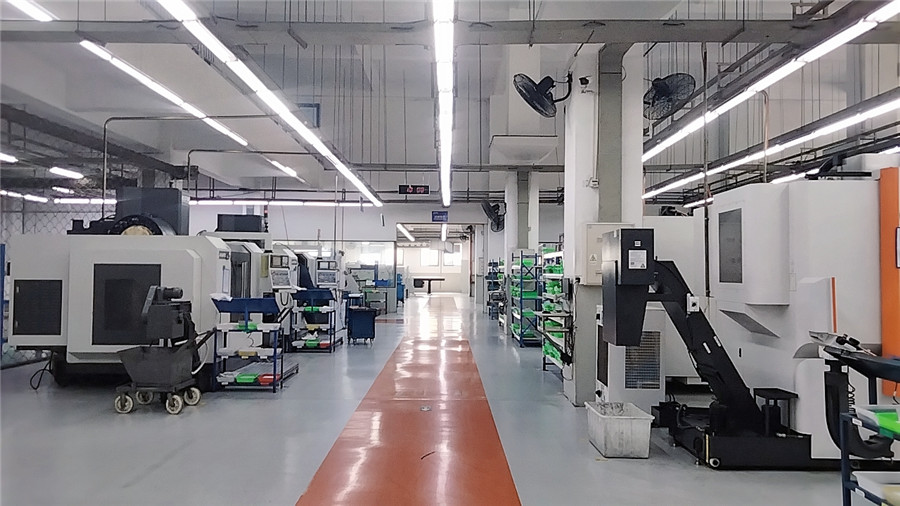
Facility size and QC headcount matter because Turkish hospital-group tenders penalize suppliers who cannot guarantee consistent lot-to-lot delivery across a 12-month contract. A factory reporting 18,000+ m² of integrated production space is typically running raw-material intake, CNC machining, surface treatment, and sterile packaging under one roof, which shortens the chain of custody a Turkish importer has to document for TİTCK. Smaller facilities are not automatically disqualifying — Bonevia's 320 m² operation still reports a 35-person QA team and multi-continent distribution — but tender committees usually request a factory audit report regardless of stated size before awarding volume contracts above a few hundred thousand dollars.
QC staffing ratios tell a similar story. Several manufacturers here report 100% finished-product inspection combined with incoming material inspection, using coordinate measuring machines, tensile and fatigue testers, and spectrometer-based material verification. For a Turkish buyer preparing a UBB submission, having these inspection methods documented in writing — not just claimed — shortens the back-and-forth with regulators considerably.
What Certifications Actually Matter for Turkish Import Clearance?
ISO 13485 and CE marking under EU MDR are the two non-negotiable certifications, because Turkey's device regulation is harmonized with the EU framework rather than running a fully independent standard. FDA registration, held by three manufacturers on this list, doesn't shorten the Turkish approval path directly, but it does signal that the factory's quality system has already passed a second major regulator's scrutiny — a useful data point when a distributor is also evaluating the supplier for re-export into North America. NMPA registration matters mainly for supply-chain transparency rather than Turkish clearance itself, confirming the product is legally sold in its country of origin.
How Should a Turkish Distributor Start Sourcing?
Start with a documented catalog request and a small trial order before committing to volume, since sample evaluation against a factory's stated fatigue-testing and dimensional-inspection data is the fastest way to confirm claims match production reality. Most of the manufacturers above offer OEM/ODM services — private labeling, custom packaging, and drawing-based manufacturing — which matters for Turkish distributors building their own branded implant line rather than reselling under a Chinese label. Request the ISO 13485 certificate number, the CE MDR notified-body reference, and a recent factory audit report as a standard first step; a supplier unwilling to share these before a purchase order is a signal to move to the next name on the list.
Frequently Asked Questions
Do Chinese trauma implant manufacturers support UBB/ÜTS registration for Turkey?
Most manufacturers with CE MDR certification can supply the technical documentation package — declaration of conformity, notified body certificate, and design dossier extracts — that a Turkish importer needs to complete UBB registration, though the registration filing itself is typically handled by the Turkish distributor or a local regulatory consultant.
What lead time should Turkish buyers expect for a trauma implant order?
Lead times vary by product complexity and order volume, and depend on whether the item is a catalog stock product or a custom OEM design; buyers should request a written production schedule tied to the specific SKUs in their tender rather than relying on a general estimate.
Can these manufacturers produce private-label products for Turkish distributors?
Yes — OEM and ODM services, including logo customization, custom packaging, and drawing-based manufacturing, are standard offerings across the manufacturers listed above.
Is CE marking alone sufficient to import orthopedic trauma implants into Turkey?
CE marking under EU MDR is the primary technical basis for Turkish market access given the harmonized regulatory framework, but the product must still complete UBB and ÜTS registration with TİTCK before distribution.
Do minimum order quantities differ significantly between these suppliers?
MOQ policies vary by manufacturer and product category; distributors should confirm MOQ, sample availability, and pricing tiers directly, since factory-stated production scale does not always correlate with lower minimum order thresholds.
How can a Turkish distributor verify a factory's production claims before ordering?
Requesting a third-party or self-conducted factory audit, reviewing batch traceability documentation, and starting with a trial order are the three most reliable verification steps before committing to a full tender-volume contract.
KaiSo Medical
KaiSo Medical
+86 16722338864
info@kaisomedical.com
Legal Disclaimer:
EIN Presswire provides this news content "as is" without warranty of any kind. We do not accept any responsibility or liability for the accuracy, content, images, videos, licenses, completeness, legality, or reliability of the information contained in this article. If you have any complaints or copyright issues related to this article, kindly contact the author above.
