

Gastric Bands Market Set to Reach US$ 1.8 Billion by 2033 at 4.7% CAGR | Persistence Market Research
Gastric Bands Market
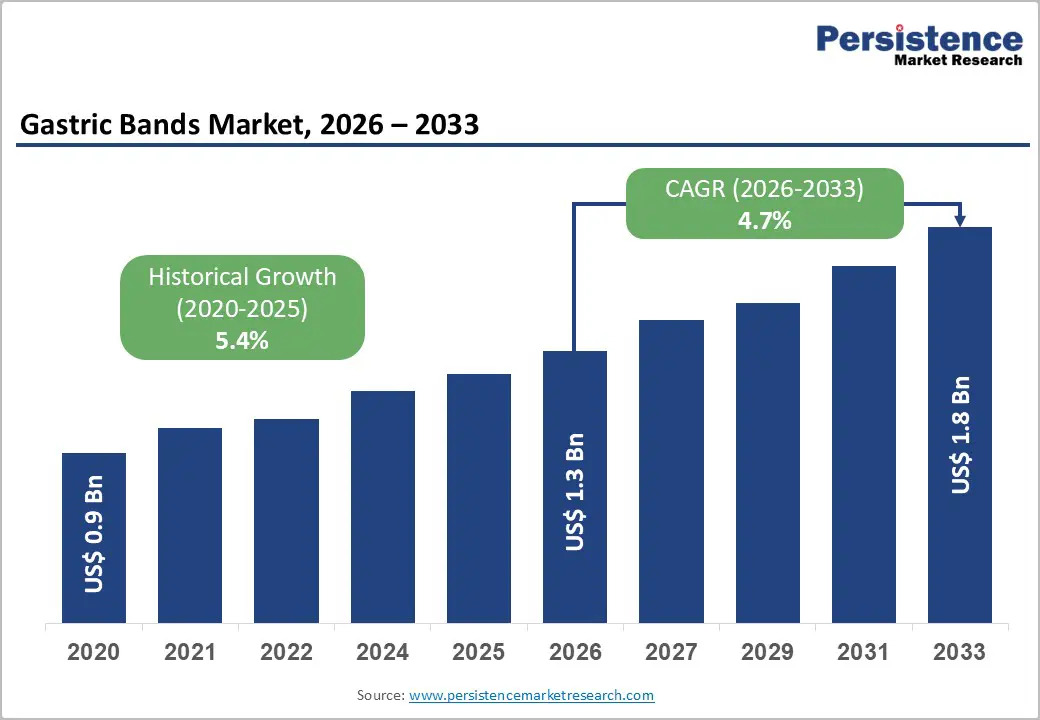
BRENFORD, LONDON, UNITED KINGDOM, August 4, 2026 /EINPresswire.com/ -- The global gastric bands market size is likely to be valued at US$ 1.3 billion in 2026 and is projected to reach US$ 1.8 billion by 2033, expanding at a CAGR of 4.7% during the forecast period 2026–2033. The market is benefiting from rising obesity prevalence, increasing healthcare expenditure, and growing awareness regarding long-term weight management solutions. Adjustable gastric bands continue to represent the leading product category because of their clinical flexibility and patient-specific customization. Hospitals remain the dominant end-user segment owing to advanced surgical infrastructure, while North America leads the global market due to high bariatric surgery volumes, favorable reimbursement systems, and widespread access to specialized obesity treatment centers.
Want Market Insights? Get Your Free Report Sample : https://www.persistencemarketresearch.com/samples/32734
Key Highlights from the Report
➤ The global gastric bands market is expected to grow from US$ 1.3 billion in 2026 to US$ 1.8 billion by 2033, registering a CAGR of 4.7%.
➤ Rising obesity prevalence continues to strengthen demand for minimally invasive bariatric procedures worldwide.
➤ Adjustable gastric bands remain the leading product segment due to flexibility, reversibility, and customized patient treatment.
➤ Hospitals account for the largest market share because of advanced surgical capabilities and multidisciplinary obesity care.
➤ North America maintains market leadership through higher procedure volumes, established reimbursement, and experienced bariatric specialists.
➤ Technological improvements in surgical devices and patient monitoring are enhancing treatment outcomes and long-term adoption.
Gastric Bands Market Segmentation
The gastric bands market is primarily segmented by product type and end user. Adjustable gastric bands dominate the product landscape because they allow surgeons to modify restriction levels according to individual patient requirements without extensive additional surgery. Their reversible nature and established clinical experience continue to make them a suitable option for carefully selected patients. Product innovation focused on improved safety, durability, and patient comfort is supporting continued demand despite increasing competition from other bariatric procedures.
Based on end users, hospitals represent the largest segment due to comprehensive bariatric surgery programs, specialized operating facilities, and experienced multidisciplinary teams. Ambulatory surgical centers are gradually expanding their presence as minimally invasive surgical techniques become more efficient and recovery periods shorten. Specialty clinics also contribute to market development by offering personalized obesity management programs, follow-up consultations, nutritional counseling, and long-term patient monitoring that improve treatment success and patient satisfaction.
Regional Insights
North America continues to dominate the gastric bands market due to increasing obesity rates, advanced healthcare infrastructure, strong awareness regarding bariatric surgery, and the presence of experienced surgeons. Favorable reimbursement policies, established treatment guidelines, and continuous investments in obesity management programs further support regional market growth. The region also benefits from high healthcare spending and widespread access to modern surgical technologies.
Europe represents another significant regional market supported by rising awareness of obesity treatment, expanding access to minimally invasive procedures, and improving healthcare facilities. Meanwhile, Asia Pacific is witnessing increasing market potential because of growing healthcare investments, rising disposable income, expanding medical tourism, and improving diagnosis of obesity-related conditions. Government initiatives promoting healthier lifestyles are expected to encourage greater adoption of bariatric interventions across emerging economies.
Customize This Report for Your Exact Requirements : https://www.persistencemarketresearch.com/request-customization/32734
Market Drivers
The primary driver for the gastric bands market is the continuously increasing prevalence of obesity and associated chronic diseases such as diabetes, hypertension, cardiovascular disorders, and sleep apnea. Healthcare professionals increasingly recognize bariatric surgery as an effective long-term treatment option when lifestyle modifications alone fail to deliver sustainable weight reduction. Growing awareness campaigns and physician recommendations continue encouraging eligible patients to consider surgical interventions.
Another important growth driver is the ongoing advancement in minimally invasive surgical procedures. Improved laparoscopic technologies, enhanced surgical precision, reduced hospital stays, and quicker patient recovery have strengthened confidence among both surgeons and patients. Better postoperative care, nutritional support programs, and long-term follow-up services further improve clinical outcomes, encouraging healthcare institutions to expand bariatric surgery programs and strengthen market demand.
Market Restraints
Despite positive growth prospects, the gastric bands market faces challenges from the increasing popularity of alternative bariatric procedures that may offer greater long-term weight reduction for certain patients. Clinical decision-making increasingly depends on patient-specific medical conditions, resulting in careful evaluation before selecting gastric band procedures. This competitive treatment landscape can limit market expansion in several developed healthcare systems.
High procedural costs, limited reimbursement availability in some countries, and concerns regarding long-term follow-up requirements also restrict wider adoption. Some patients remain hesitant because of the need for regular adjustments and ongoing medical supervision. Variations in healthcare infrastructure, access to trained bariatric surgeons, and affordability across developing economies continue creating barriers for broader market penetration.
Unlock Complete Insights – Buy the Full Report : https://www.persistencemarketresearch.com/checkout/32734
Market Opportunities
Growing investment in obesity management programs presents substantial opportunities for the gastric bands market. Increasing public awareness regarding preventive healthcare, combined with expanding insurance coverage in selected regions, is expected to improve patient access to bariatric surgery. Continuous innovation focused on safer devices, improved patient comfort, and enhanced surgical efficiency will further strengthen market competitiveness.
Emerging economies offer significant long-term growth potential because of improving healthcare infrastructure, expanding hospital networks, rising medical tourism, and increasing healthcare expenditure. Strategic collaborations among medical device manufacturers, hospitals, and bariatric specialists can accelerate product adoption while supporting physician education and patient awareness. Digital health technologies supporting postoperative monitoring and personalized patient management also represent promising opportunities for sustained market growth.
Company Insights
Key players operating in the gastric bands market include:
• Apollo Endosurgery, Inc.
• Medtronic plc
• Johnson & Johnson
• Cousin Biotech
• Allergan plc
• B. Braun SE
• Bariatric Solutions International
• ReShape Lifesciences Inc.
• Aspire Bariatrics
• Spatz FGIA, Inc.
Explore the Latest Trending Research Reports:
Molecular Diagnostics Market
Next Generation Sequencing Market
Persistence Market Research
Persistence Market Research Pvt Ltd
+1 646-878-6329
email us here
Visit us on social media:
LinkedIn
Instagram
Facebook
YouTube
X
Legal Disclaimer:
EIN Presswire provides this news content "as is" without warranty of any kind. We do not accept any responsibility or liability for the accuracy, content, images, videos, licenses, completeness, legality, or reliability of the information contained in this article. If you have any complaints or copyright issues related to this article, kindly contact the author above.
